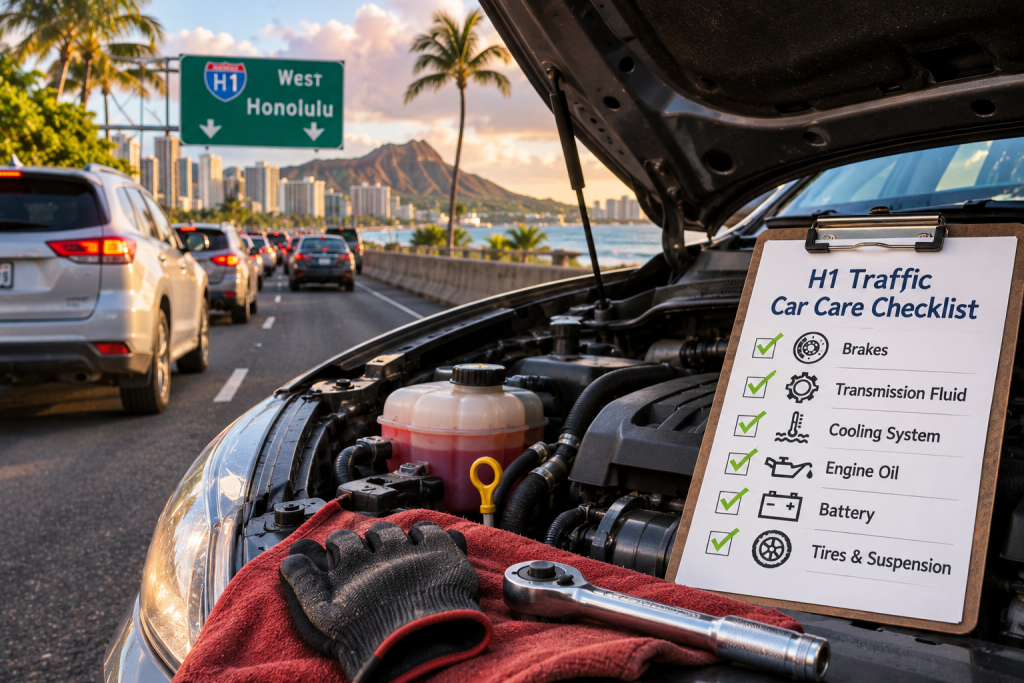
Anyone who drives on Oahu knows the routine. You merge onto the freeway, speed up for a few moments, then slow to a crawl, then speed up again. The pattern repeats for the entire commute. It feels like ordinary driving, but for your car it is a very different kind of work than steady cruising. Stop and go driving asks more of the brakes, the transmission, the cooling system and several other parts, and it does so over and over. This guide explains how heavy traffic wears a car faster, what signs to watch for, which services matter most and what you can do to ease the strain. If you are looking into stop and go driving in Honolulu, this is the plain language overview.
Why Stop and Go Driving Is Hard on a Car
When a car moves at a steady pace, most parts settle into an easy rhythm. In heavy traffic, almost everything is constantly changing. The engine speeds up and slows down, the transmission shifts again and again, the brakes engage dozens of times in a short stretch and the car spends long periods idling with little airflow. Mileage may look modest at the end of the week, yet the parts have gone through a lot of work. That is why two cars with the same odometer reading can be in very different condition.
Honolulu adds a few extra factors. Warm weather means engines and fluids already run in a hot environment, and the island’s coastal air can speed up corrosion on metal parts. Our salt air car care tips cover how to protect your car from that side of island life.
How Heavy Traffic Wears Your Brakes
Brakes turn motion into heat by pressing pads against rotors. Every time you slow down, they do that job, and in traffic you do it constantly. More stops means more wear on pads and rotors, and more heat building up in the system.
- Pads wear down faster. The friction material is slowly used up with each stop.
- Rotors can wear unevenly. Heat and repeated use may lead to vibration or pulsing in the pedal.
- Brake fluid works harder. Heat is hard on brake fluid, and fluid ages over time. Your owner’s manual lists how often it should be inspected or changed.
- Calipers and hardware can stick or wear, especially in a coastal climate.
Brake warning signs
- Squealing, grinding or scraping noises when you slow down
- A pedal that feels soft, spongy or sinks lower than usual
- The car pulling to one side when you brake
- Vibration in the pedal or steering wheel while stopping
- A brake warning light on the dashboard
Brakes are a safety system. If the pedal feels soft or the car does not stop the way it should, do not keep driving normally. Have it inspected right away. Brake repairs are often best handled by a qualified technician, and some jobs may need a shop.
How Heavy Traffic Wears Your Transmission
The transmission takes engine power and delivers it to the wheels, and it shifts or adjusts constantly in traffic. All that activity generates heat, and heat is the biggest enemy of transmission fluid and internal parts.
- More shifting. Automatic transmissions change gears or ratios over and over in start and stop conditions.
- More heat. Low speeds and idling mean less airflow to carry heat away.
- Fluid breaks down. Over time, transmission fluid can lose its ability to lubricate and cool.
Transmission warning signs
- Slipping, when the engine revs but the car does not respond as it should
- Delayed or harsh shifting
- A jolt or shudder when changing gears or pulling away
- A burning smell
- Reddish fluid under the car
- A warning light
If you notice these, have the car checked soon. Driving with a slipping transmission can turn a small problem into a bigger one.
Transmission Fluid Service: What to Know
Transmission fluid service is one of the most important ways to protect the transmission in a car that spends time in traffic. The details depend on the car, so follow your owner’s manual.
- Check the schedule. Manufacturers list service intervals for transmission fluid, and some give a shorter schedule for severe driving, which often includes heavy stop and go use. Look for that wording in your manual.
- Use the right fluid. Different transmissions need different fluids, and the wrong one can cause damage.
- Know your type. Some cars have a dipstick, while many modern ones are sealed and need a technician to check the fluid.
- Condition matters. Fluid that is dark, gritty or burnt smelling is a reason for a closer look.
- Not every job is the same. A drain and fill, a fluid exchange and a filter service are different procedures, and which one is right depends on the vehicle. A technician can explain the options.
Because transmissions vary so much, ask a qualified technician what your car needs rather than guessing.
The Cooling System and Idling
Idling in warm weather puts extra load on the cooling system. The radiator, fans, hoses and coolant all work harder when little air is moving over the car. Watch the temperature gauge, and if it climbs higher than normal, find a safe place to pull over and turn off the engine. Never open a hot radiator or coolant cap, because the system is under pressure and can cause serious burns. Check the coolant level when the engine is cool, and have any leaks looked at.
Engine Oil and the Battery
Short trips and slow traffic are hard on oil, since the engine may not run long enough at steady temperature to clear moisture and contaminants. Follow the service schedule in your manual, and look for any severe driving schedule it lists. Batteries also work harder when the car spends a lot of time idling with the air conditioning, lights and electronics running, and heat shortens battery life. If the car starts slowly, have the battery tested.
Tires, Suspension and Steering
Traffic is not only about the brakes and transmission. Potholes, rough patches and tight turns in parking structures add wear to tires, shocks, struts and steering parts. Check tire pressure regularly, watch for uneven wear and pay attention to any pulling, bouncing or clunking noises.
Driving Habits That Help
You cannot make traffic disappear, but small changes can reduce the strain on your car.
- Leave more space. A larger gap lets you roll gently instead of braking hard over and over.
- Look ahead. Easing off the accelerator early can save the brakes from some of the work.
- Avoid riding the brake pedal. Resting your foot on it causes extra wear and heat.
- Do not hold the car on a hill using the accelerator. It adds heat to the transmission.
- Use the parking brake where your owner’s manual recommends it.
- Do not ignore small symptoms. Early attention is usually simpler than waiting for a breakdown.
A Simple Maintenance Plan for Heavy Traffic Drivers
- Have the brakes inspected regularly, including pads, rotors and fluid.
- Follow the severe driving schedule for the transmission, if your manual lists one.
- Keep up with oil changes and coolant checks.
- Test the battery before it fails.
- Check tire pressure and wear.
- Look for leaks under the car where you park.
- Keep the car washed to remove salt from the air.
How a Mobile Mechanic Can Help
When your commute already takes a lot of time, you do not want to lose more of it sitting in a waiting room. A mobile mechanic can come to your home or workplace in Honolulu to inspect the brakes, check fluids, look for leaks and talk through what your car needs. Many routine jobs can be done on site, including brake pad service and some fluid services. Other work, such as certain transmission repairs or major brake jobs, may need a shop with a lift and specialized equipment. A good technician will tell you honestly which is which.
Quick Summary
- Stop and go traffic means more braking, more shifting, more idling and more heat.
- Brakes and transmission fluid deserve special attention.
- Follow the severe driving schedule in your owner’s manual if there is one.
- Do not ignore soft pedals, slipping, grinding or burning smells.
- Gentle driving habits reduce wear.
A little attention goes a long way for a car that spends its days in traffic. If you would like a professional to look things over, visit the Mobile Mechanic Pros of Honolulu homepage to learn more, or contact us to schedule a visit.