
A vehicle that would comfortably last fifteen or twenty years on the mainland often shows meaningfully more corrosion here on Oahu well before reaching that age. This is not a coincidence or a sign of lower quality vehicles being sold locally, it comes down to a specific combination of environmental factors that most drivers moving to Honolulu from the mainland have simply never had to think about before. Understanding why island vehicles age differently, and what routine checks actually help, makes a real difference in how long a car lasts here, and it is knowledge that even longtime residents sometimes never fully connect to the maintenance choices they make.
Why Salt Air Alone Puts Oahu Ahead Of Most Mainland Cities
Even mainland coastal cities usually have some buffer from the ocean, whether that is distance, elevation, or simply enough land mass that salt concentration in the air drops off meaningfully a few miles inland. Oahu does not offer that same buffer. As an island, salt laden air reaches essentially every part of it, carried by consistent trade winds that blow across the entire landmass rather than dissipating the way they might over a larger continental area. This means vehicles parked well away from the coast, even in areas like Pearl City or Aiea, still experience salt exposure that would be considered unusually high for an inland mainland location.
The Added Factor Most Mainland Comparisons Miss
What makes Oahu’s corrosion challenge genuinely different from even other coastal or island locations is volcanic haze, locally known as vog, which drifts over from ongoing volcanic activity on the Big Island. Vog contains sulfur dioxide and other compounds that, when combined with atmospheric moisture, can form mildly acidic conditions on exposed surfaces. While vog concentration varies depending on wind patterns and how active volcanic sources happen to be at a given time, its periodic presence adds an additional corrosive element that most mainland vehicles, even those in humid or coastal cities, never have to contend with at all.
When this vog exposure combines with Oahu’s already salt heavy air and consistently high humidity, the result is a corrosion environment that is measurably more aggressive than what a comparable coastal mainland city would produce, even one with similar average humidity and proximity to salt water.
Where This Combination Causes The Most Damage
The undercarriage bears the brunt of this combined exposure, since it sits closest to the road and collects the most direct contact with salt residue and airborne moisture without ever being visible during a routine glance at the vehicle. Brake lines, exhaust systems, and suspension components are particularly vulnerable, since corrosion here can eventually compromise safety rather than just appearance. Battery terminals and exposed electrical connections face similar risk, sometimes leading to starting problems or intermittent electrical issues that develop gradually rather than announcing themselves all at once.
Body panels and trim pieces are not immune either, particularly around door seams, wheel wells, and the underside of bumpers, where surface rust can develop and spread if left untreated, especially on older vehicles that were not built with tropical, salt heavy conditions specifically in mind.
Why Routine Checks Matter More Here Than On The Mainland
Because so much of Oahu’s accelerated corrosion happens out of sight, underneath the vehicle or within small electrical connections, routine inspections carry considerably more weight here than they would for a driver on the mainland following a standard maintenance calendar. A technician familiar with island specific conditions knows to check brake lines, suspension components, and accessible electrical connectors more thoroughly and more frequently than a generic maintenance schedule would suggest, since the combined salt, humidity, and occasional vog exposure here genuinely accelerates wear beyond what standard intervals were designed to anticipate.
Catching corrosion early during a routine inspection usually means a simple, affordable fix, whether that is a protective coating applied to an undercarriage component or a bit of dielectric grease on a vulnerable connector. Waiting until a problem causes an actual failure, like a corroded brake line or a connector that has failed outright, turns a minor maintenance item into a significantly larger repair. If you have experienced starting trouble that seems to have developed gradually, our guide on the top 10 reasons your car won’t start and how to get back on the road covers a range of causes, several of which trace back to this kind of island specific corrosion.
Simple Habits That Help Slow The Damage
Washing your vehicle regularly, including a deliberate rinse of the undercarriage, helps remove accumulated salt and residue before it has extended time to sit and cause damage. Applying a rust inhibiting treatment to exposed undercarriage components on a regular schedule adds meaningful protection against the specific combination of stresses Oahu vehicles face, and checking drainage points around doors and rocker panels ensures water and residue do not pool in areas already prone to corrosion.
Paying attention to vog conditions specifically, and giving your vehicle an extra rinse after a particularly heavy vog day when air quality reports mention elevated levels, is a habit that has no real equivalent for a mainland driver but genuinely helps here. Since vog exposure is not constant the way salt air is, timing a wash to follow a notably vog heavy stretch of weather can meaningfully reduce the additional corrosive residue that settles during those periods compared to washing on a purely fixed schedule regardless of recent conditions.
Why A Mobile Mechanic Fits Oahu’s Climate Reality
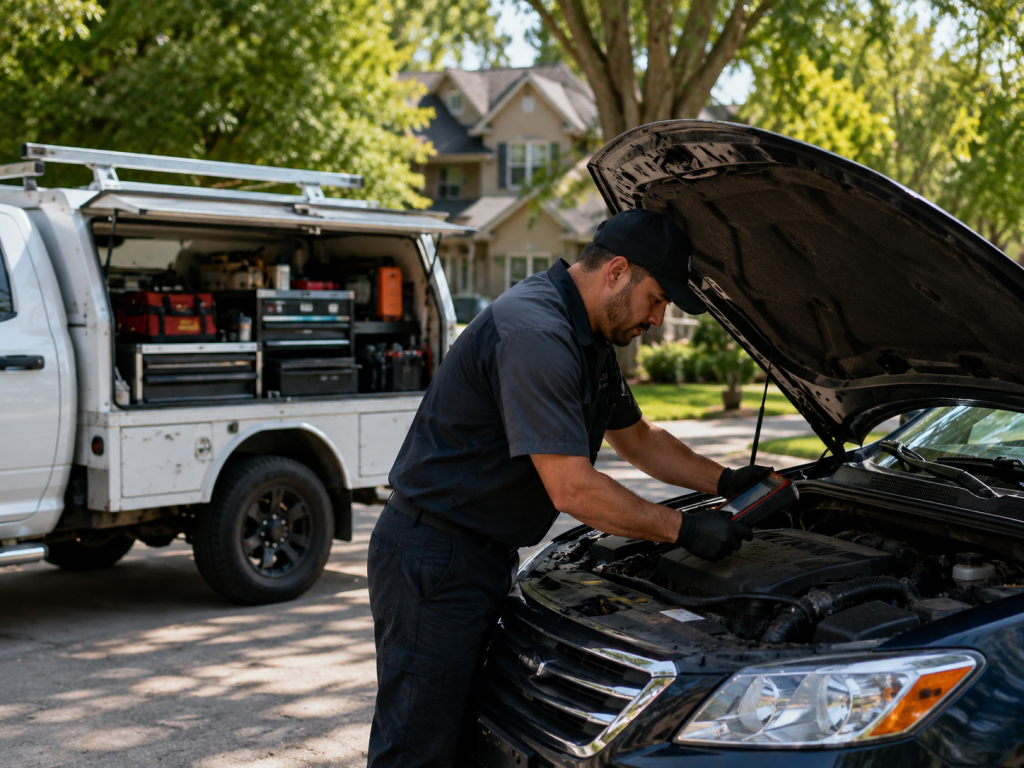
Given how much of this maintenance revolves around inspecting hard to reach undercarriage components and electrical connections, having a technician come directly to your home or workplace anywhere on Oahu is often more practical than arranging a separate shop visit. A mobile mechanic familiar with island conditions can perform a thorough inspection, applying protective treatments and catching early corrosion before it becomes a larger issue.
We covered the broader benefits of this approach in our article on why mobile mechanics are better than traditional auto shops in Honolulu, which explains how convenience and local familiarity come together, particularly useful for the kind of ongoing corrosion prevention that island ownership genuinely requires.
Protect Your Vehicle From Oahu’s Accelerated Aging
Living on Oahu comes with plenty of advantages, but it also means your vehicle faces a combination of salt, humidity, and occasional volcanic haze that most mainland drivers never have to think about. Catching corrosion early, and understanding why it develops faster here than almost anywhere on the mainland, can add years to the life of components that would otherwise wear out well before their time, whether that vehicle is a daily commuter or a car you plan to keep for the long haul.
If it has been a while since your vehicle had a thorough inspection, visit our homepage to learn more about our services, or reach out through our contact us page to schedule a visit wherever your vehicle happens to be parked on Oahu.
A little proactive care now goes a long way toward keeping your car dependable despite everything island conditions throw at it that a mainland vehicle would never have to face. It is a small ongoing habit that pays off considerably over the years, especially compared to the cost of dealing with a corroded brake line or a failed electrical connection that could have been caught much earlier.